Ernakulam & Kochi · on site across Kerala
Performance Management Consultant in Kochi
I design and implement performance management systems for organisations in Kochi and across Ernakulam — role-level KRAs tied to business goals, a review rhythm that survives the season, and measures that work across multiple outlets and sites. I am based in Kollam and work on client premises throughout Kerala.
What makes measurement harder in Kochi than the textbooks allow
Kochi is not a single-industry city, and that is precisely the problem with borrowed appraisal formats. A logistics operator at the port, a seafood exporter, a services firm at Infopark and a three-outlet retail chain are all measuring people — but the thing that makes each of them hard to measure is different in each case.
Three patterns come up in Ernakulam far more than they do inland, and each one breaks a standard template in a specific way.
Multiple locations under one owner
Outlets, branches, depots and sites that share a designation but not a workload. Applying one target across them punishes the harder posting and flatters the easier one, and everybody in the business knows which is which.
Sharp seasonality
Tourism, seafood export, retail and construction all peak hard and go quiet. Measuring against a flat monthly average records the calendar rather than the person.
Third-party dependency
Port timelines, customs clearance, subcontractors and client sign-off sit outside the role. When they enter the scorecard unadjusted, the measure stops describing performance and starts describing luck.
Knowledge work alongside operations
Services and IT firms cannot count units. Measuring hours logged records attendance; the useful measures are delivery commitments met, quality of output and capability growth.
Sector by sector: where the measure should actually sit
Illustrative starting points for the sectors most common in and around Kochi. The right set always depends on what your organisation controls and what it already records.
The scale behind two of these rows is real and checkable: Infopark alone now hosts 582 companies employing about 72,000 professionals (2025), and Kochi ranks among India's top three seafood export ports, alongside Visakhapatnam and JNPT, in a year India's seafood exports hit a record ₹73,890 crore. (Infopark) (seafood exports) Neither sector's measurement problem is small enough to defer.
| Sector | What makes measurement hard | Where the measure should sit |
|---|---|---|
| Logistics, shipping and port services | Turnaround depends on vessel schedules, customs and third-party handling that the role does not control | Documentation accuracy and completeness on time; controllable dwell time; demurrage attributable to internal delay only; safety compliance |
| Seafood and marine export | Sharp seasonality, and quality outcomes that are decided by process compliance long before dispatch | Yield or recovery rate against standard; HACCP and cold-chain compliance observations; rejection and rework at inspection; documentation cleared first time |
| Spices, rubber and commodity trading | Margin swings with market prices nobody in the business controls | Volume handled against plan; procurement quality against specification; outstanding beyond agreed credit days; stock accuracy against book |
| IT and services firms (Infopark, SmartCity) | No countable unit of output; effort is easily mistaken for contribution | Delivery commitments met against plan; defects escaping to the client; billable utilisation against a realistic target; capability progression on a skill matrix |
| Multi-outlet retail (jewellery, textiles, food) | Outlets share a designation but not a footfall, and festival peaks distort everything | Conversion rate rather than raw sales; target set per outlet against its own plan; shrinkage; customer service observations; roster adherence in peak weeks |
| Hospitality and tourism | Occupancy is seasonal and largely set by marketing and location, not by the shift supervisor | Guest satisfaction on a consistent instrument; service recovery time; cost per occupied room where controllable; roster and attendance in peak season |
| Construction, projects and building materials | Milestones depend on subcontractors, approvals and material arrival | Milestones met where inputs were available; rework and snag list volume; safety incidents; documentation and billing raised on time |
| Manufacturing and auto ancillary (Kalamassery belt) | Output is shared across a line, so individual attribution is often artificial | Team output shared; individual quality, documentation and safe practice, which are individually attributable |
The common thread is the same in every row: separate what the role controls from what the market, the season or a third party decides. Everything else follows from that one distinction.
How an engagement runs
The sequence matters more than the format. A well-drafted template applied to undefined roles fails predictably, whichever sector it is applied in.
- 1 Diagnostic. Structure, roles, locations, seasonality and what your systems already record. This is where scope becomes clear.
- 2 KRA architecture. Result areas defined role by role, cascaded from business goals, limited to what each role controls.
- 3 Measurement design. Indicators drawn from records you already keep, adjusted for season and for location where that is genuinely warranted.
- 4 Review architecture. A calendar, a rating discipline, and a documented conversation structure managers can hold without dreading it.
- 5 Manager capability. Training the people who will run reviews, and calibrating them across locations so a four means the same thing in every outlet.
- 6 Rollout and handover. One full cycle run alongside your team, with dashboards leadership can read at a glance.
Who you would be working with
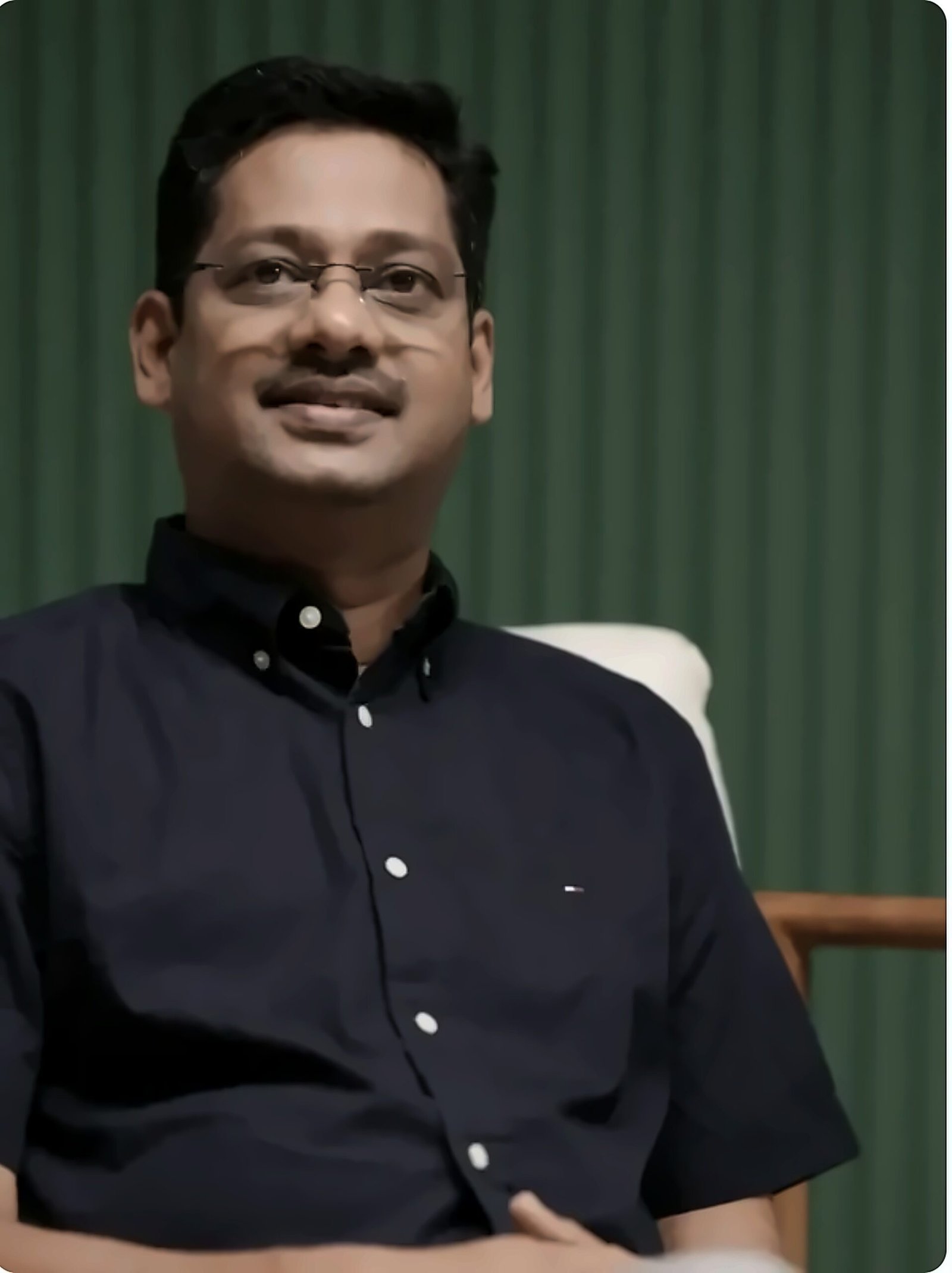
Dr. Babu Balakrishnan — MBA, MPhil, PGDHRM, PGDTRM, Ph.D, UGC-NET. Management Consultant — MSME (HR Domain) and a UGC qualified academician, with over 26 years of core industry experience across white goods, banking, automobile, manufacturing and academia.
- ✓ Independent Director registered with the Indian Institute of Corporate Affairs, Ministry of Corporate Affairs (Reg. No. IIDB-ID-2022)
- ✓ Master Trainer and Lead Assessor, National Skill Development Corporation, Government of India
- ✓ Adjunct Faculty, Department of Management — MBA and postgraduate teaching
Frequently Asked Questions
Do you have an office in Kochi?
No. I am based in Kollam and travel to client sites across Kerala, including Ernakulam and Kochi, throughout the year. BPro, the consulting practice, is based in Kochi and extends this work across South India, with online and digital engagements reaching organisations in the UAE and Malaysia through the PPP (Professional Participatory Performance) consultation model. Diagnostic and design work runs comfortably remote; rollout and manager training are done on your premises.
Is this recruitment or staffing?
No. In Kerala the phrase HR consultancy usually means a placement agency, and Kochi is where most of that industry sits. I do not supply candidates. I design the systems that make the people you already employ measurable, developable and accountable.
We run three outlets across Ernakulam. Can one system cover them?
Yes, and it should. The design work is making outlets comparable without pretending they are identical. A high-street outlet and a mall outlet face different footfall and different staffing patterns, so targets are set per location while the result areas and the rating discipline stay common.
Our business is seasonal. Does a performance system still work?
It works better, provided the measures are set against a seasonal plan rather than a flat annual average. Tourism, seafood export and retail all peak sharply in Kerala. Measuring a hospitality supervisor against the same monthly number in August and December simply records the calendar.
We are an IT services company at Infopark. Is this relevant to knowledge work?
Yes, though the measures differ. Knowledge roles are measured through delivery commitments, quality of output and capability growth rather than unit volume. The common failure is measuring hours logged, which records attendance rather than contribution.
How long does an engagement take?
It depends on the number of distinct roles and locations rather than headcount. A focused engagement moves through diagnostic, KRA design, review architecture and manager training, then one full review cycle run alongside your team before handover.
What does it cost?
Scope drives cost, so it is quoted after a short diagnostic rather than from a price list. The variables are the number of distinct roles to design, the number of locations, and how much manager training is needed.
What size of organisation is this for?
Typically organisations past the point where the promoter can assess everyone personally, often between thirty and five hundred people. Below that, a lighter goal-setting structure is usually more honest than a full system.
Talk through your situation
A short conversation is usually enough to tell whether your organisation needs a full performance system or something lighter. Either answer is useful, and I will say which it is.
Book a consultation +91 80869 08876
Based in Kollam — working on site with organisations across Ernakulam, Kochi and Kerala.
More on performance management
Case Study: 150-Employee Furniture Manufacturer
From people-dependent management to role clarity, KRA-based review and dashboard visibility. Kerala, 2023 to present.
Performance Management Consulting in Kerala
How a performance system is designed and implemented for a growing organisation, and what an engagement actually involves.
Free: HR Maturity Diagnostic
Seven questions about how your people systems actually run today. Get your maturity level and the one thing worth doing next. Free, in about two minutes.
KRA and KPI Design
The difference between result areas and indicators, with worked examples for production, quality, sales, finance and HR roles.
Free KRA and KPI Template
An eight-sheet Excel workbook with worked result areas for six common roles, plus a blank template. No email required.